
October 8, 2026
I Built a Shopify UGC Test Matrix Before Making Another Ad
A practical way to turn one Shopify product into a focused set of AI UGC video tests without rebuilding every creative from scratch.
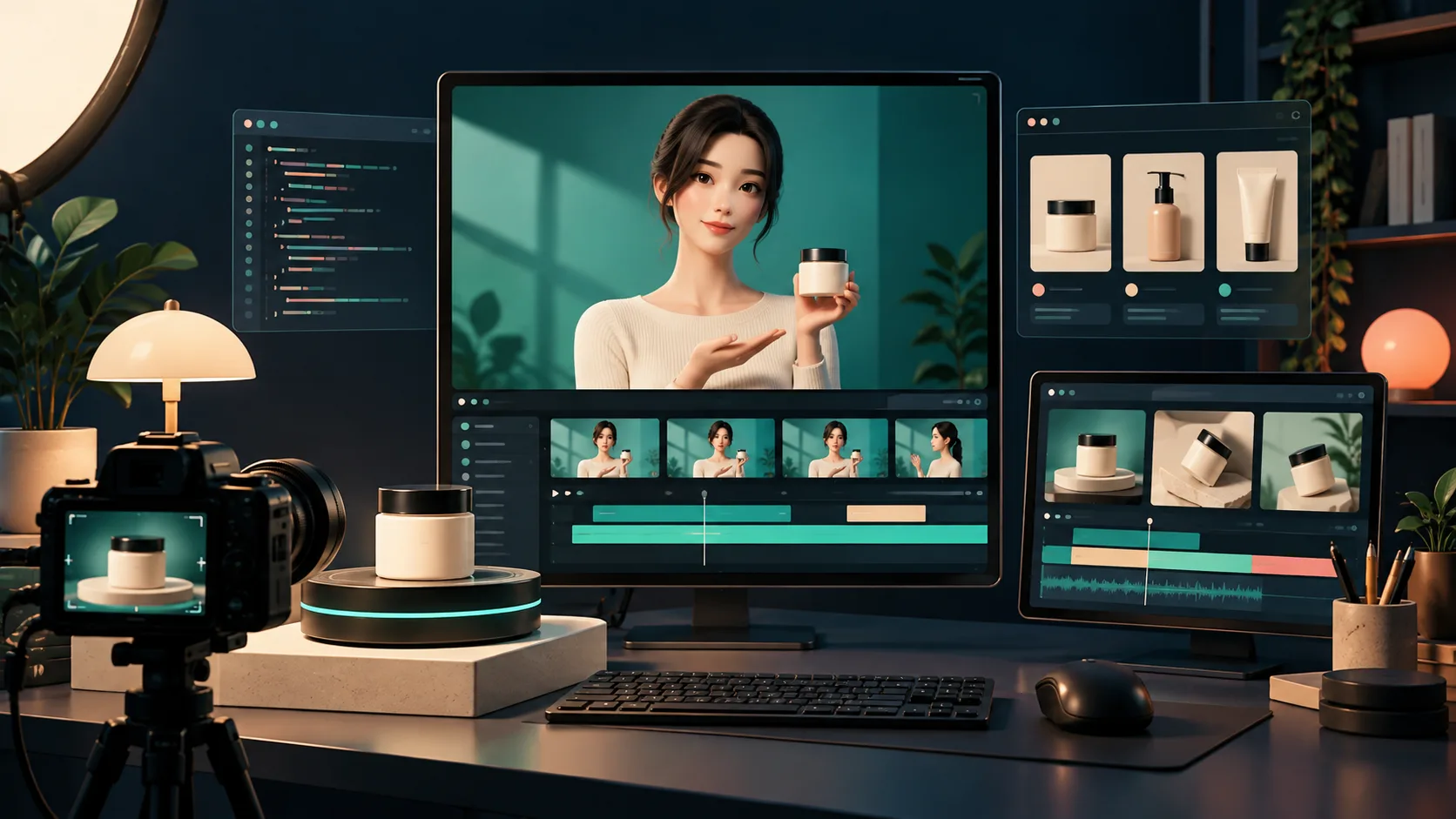
I was about to request another UGC ad when I noticed the real problem: I did not need one more video. I needed a repeatable way to learn which kind of video made a shopper move.
For a Shopify store, a useful UGC-style video has a job. It can stop a scroll, answer the one objection blocking a product-page purchase, make an email feel less flat, or help a new customer use the thing they just bought. If I throw all of those goals into one brief, I get a muddled asset and learn almost nothing.
So I now start with a tiny test matrix. It is intentionally less glamorous than a big creator brief, but it is much easier to ship. Supra UGC Maker is useful here because it lets me combine an avatar, scene, product reference, script, voice, and clip edits in one reusable project. I can make a UGC-style variation without rebuilding the whole production setup every time.
Start with one product question
I pick one SKU and write the question I want the creative to answer. Not “make a good ad.” Something constrained, such as:
- Does a problem-first hook beat a use-case-first hook?
- Does a clean studio demo make the feature clearer than a lifestyle scene?
- Does a concise product-page explainer reduce the uncertainty around setup?
That constraint keeps the comparison honest. If the hook, avatar, scene, offer, and CTA all change at once, a winning result is hard to reuse.
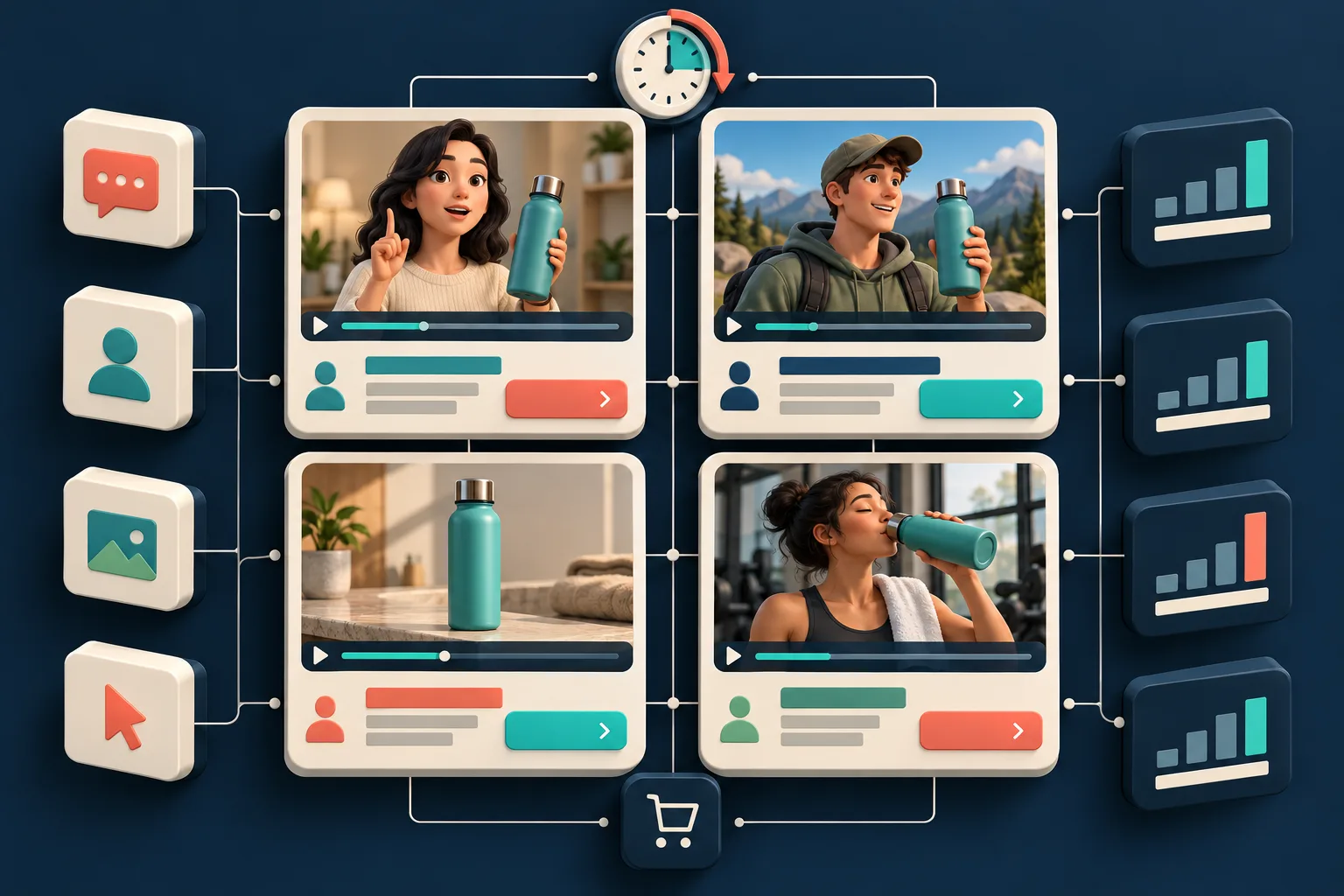
For the first pass, I keep the matrix to four clips:
1 product × 2 hooks × 2 scenes = 4 short video variations
For example, a reusable water bottle could get a “tired of leaks?” hook and a “one bottle for commute and trail” hook. Each runs once in a close product-demo scene and once in a warm everyday setting. The product, offer, and main CTA stay fixed. That gives me a compact comparison instead of a pile of unrelated footage.
This is the same discipline I use in a Shopify UGC video testing plan: decide what the variation is supposed to teach before touching the render button.
Build a reusable project, not four disposable ads
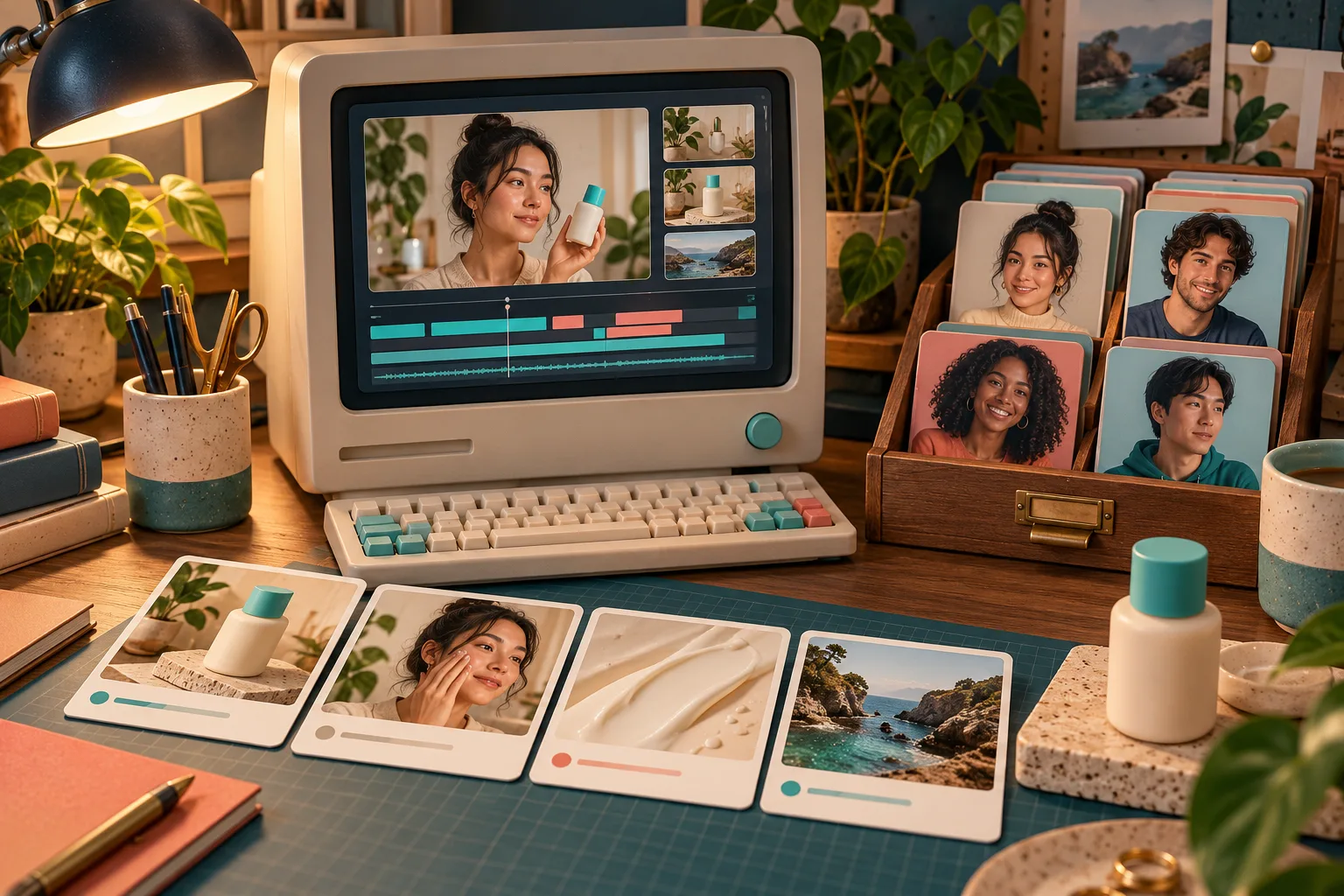
Inside Supra UGC Maker, I set the stable pieces first: product reference, the base scene, avatar, voice/tone, and the closing CTA. Then I duplicate the project for each variable. The practical advantage is that I can preview scenes, reorder or trim clips, and regenerate just the part that changed.
My working brief looks like this:
{
  "product": "insulated bottle",
  "audience": "commuters who also train",
  "promise": "one bottle, fewer leaks",
  "variable": "opening hook",
  "cta": "See the bottle details"
}
The script is where I stay careful. AI avatar product videos are great for scalable creative testing and explainers; they are not a substitute for a real customer’s specific experience or a creator-led testimonial. I do not write made-up reviews or “I lost 20 pounds” claims into the avatar’s mouth. Use real creators when relationship, lived experience, or community trust is the point.
Give each version a landing place
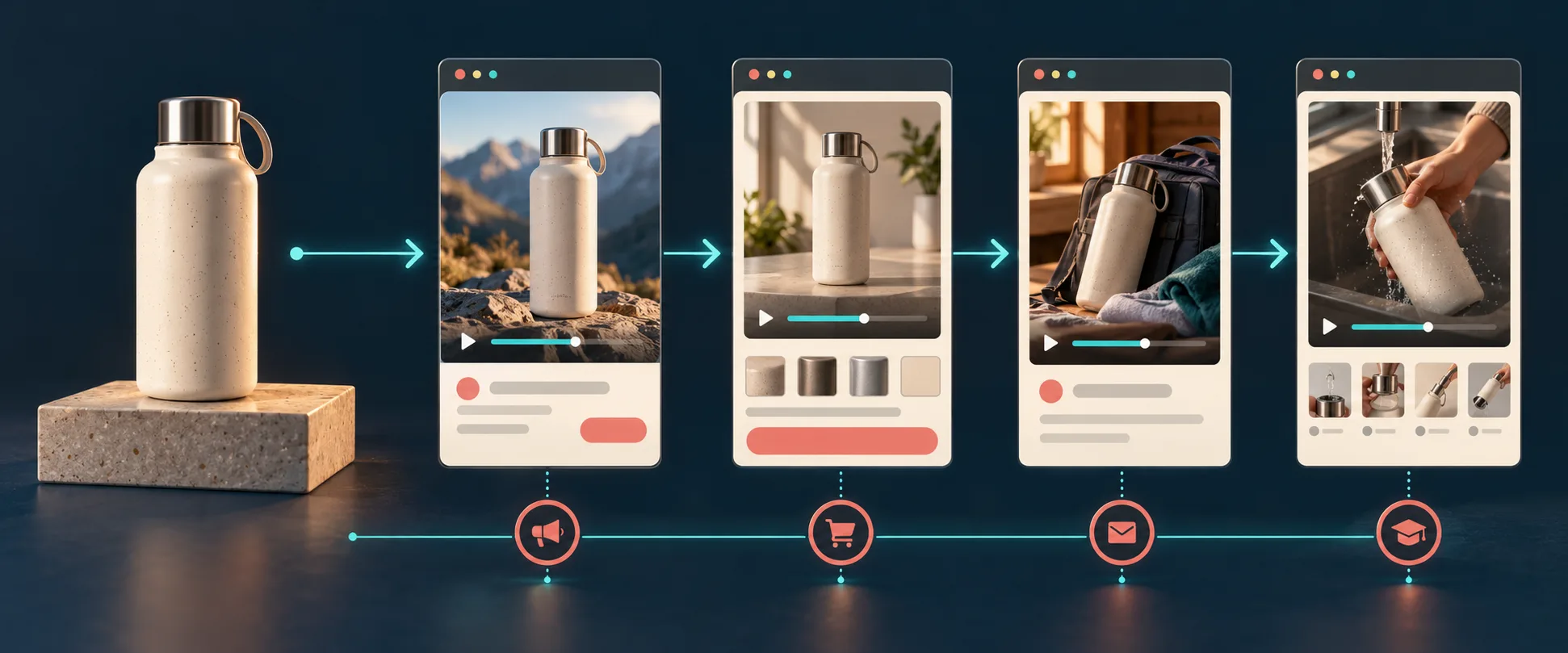
A useful video test should have a clear destination. I usually assign the four clips before I generate them:
- Paid social: the fastest problem/benefit hook, built for the first seconds.
- Product page: a calmer demo that shows scale, use, and the key decision detail.
- Email: a short teaser that earns the click rather than trying to explain everything.
- Post-purchase: an education clip that prevents a predictable “how do I use this?” support message.
That last slot is underrated. A video does not have to win a click to be valuable. A clear post-purchase walkthrough can make the product less surprising after delivery. It is a different job from a launch ad, which is why I plan it separately.
If the creative begins as a launch asset, I also borrow the workflow from turning a startup URL into a reviewable launch video: get something reviewable early, then revise from evidence instead of opinions.
Review the boring details before export
Before I download anything, I run a five-minute review:
- Is the product visible early enough to make sense without sound?
- Does the avatar script match what the product actually does?
- Does the scene support the use case instead of distracting from it?
- Is there only one action in the CTA?
- Can I tell which variable this version is testing from the filename?
I also keep a simple naming convention: sku-hook-scene-placement-v1. It sounds fussy until a winning edit has to be rebuilt for an email, a product page, and a retargeting campaign two weeks later.
What I would measure first
For a paid creative test, I look for the signals closest to the video’s job: early hold, click-through rate, and then downstream add-to-cart or purchase quality. On a product page, I care more about whether visitors who watch are progressing through the page and converting. In email, clicks and revenue per recipient matter more than a vanity view count.
The goal is not to crown a universal “best video.” It is to find the best opening, scene, and explanation for a particular shopper moment. Once I have that, I can create the next variation with a reason.
That is the compounding part. A reusable project turns creative production into an operating loop: write a small hypothesis, generate a few focused variations, place each one where it belongs, and keep the winner’s structure. If you need a practical starting point, install Supra UGC Maker, make one four-clip matrix for a single SKU, and record the question each clip is meant to answer.