
August 11, 2026
How I Turn One Shopify Product Into a Week of UGC Video Tests
A practical Shopify workflow for turning one product brief into reviewable AI UGC video tests for ads, product pages, and email.
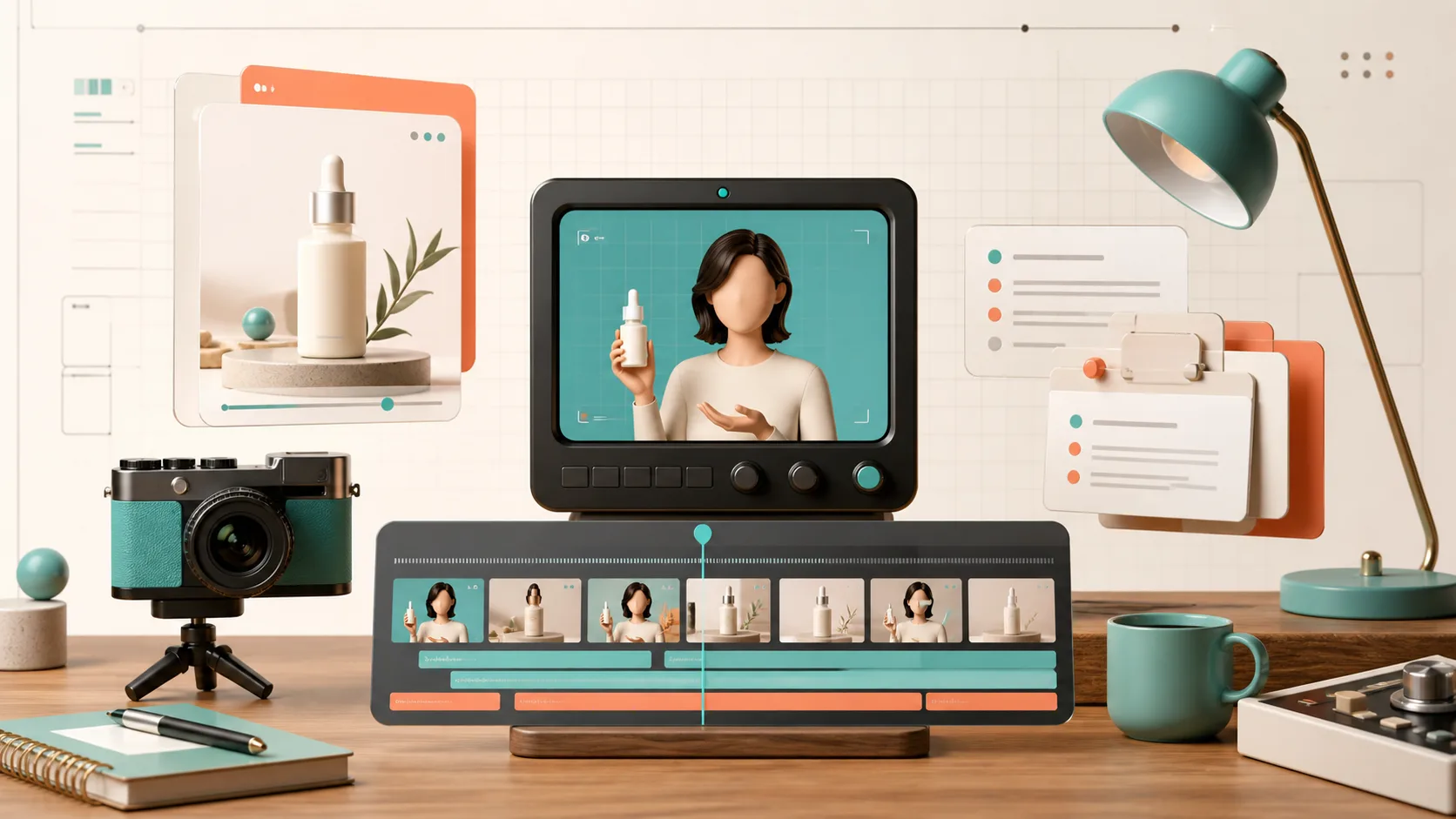
Most Shopify teams do not have a creative shortage because they have no ideas. They have one because every new angle used to mean another shoot, another creator brief, and another edit queue. That made me treat video as a launch-only deliverable instead of something I could test every week.
My workaround is to start with one product brief, turn it into a small set of deliberate UGC-style video hypotheses, then send only the useful versions onward. Supra UGC Maker is the AI UGC video generator I would use for that job: it lets a merchant choose an avatar, scene, product reference, script, and voice/tone; preview the scene; then generate, reorder, trim, update, or regenerate clips in a reusable project. It is not a substitute for real customer proof or a trusted creator relationship. It is a much better fit for scalable creative testing and product explainers.
The input is a product brief, not a vague prompt
I make a tiny source-of-truth document before opening the video tool. Mine has five fields: the product, the customer problem, the proof point, the objection, and the desired next action. For a serum, that might be: lightweight daily hydration; visible texture; how it fits a morning routine; concern about stickiness; view the product page.
That detail matters because it prevents a common failure mode: producing five clips that all say the same generic thing. I borrowed this discipline from my product-photo routing system. One source asset can serve multiple destinations, but each destination needs a reason to exist.
Build a matrix before you generate
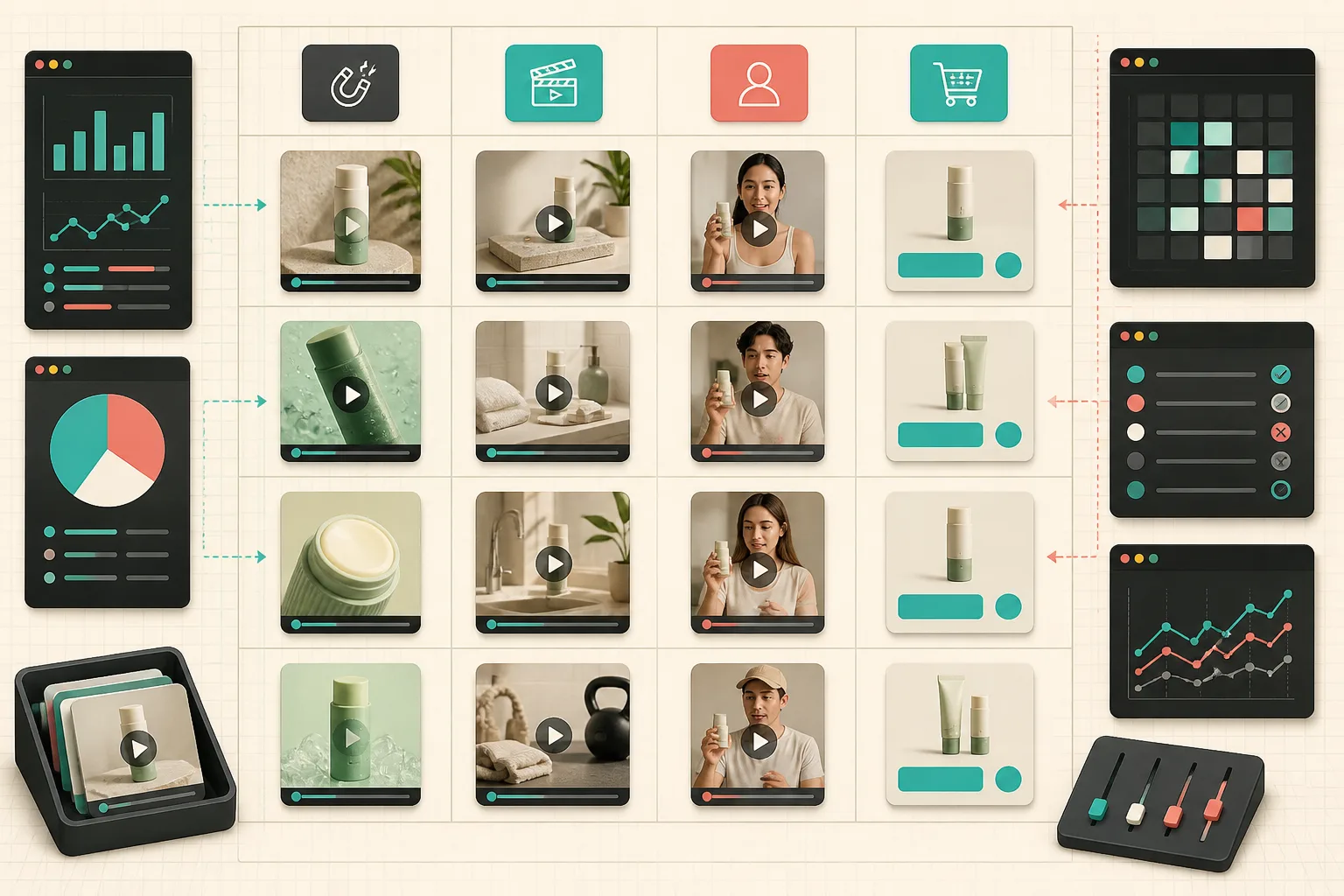
For one product, I normally plan four to six combinations rather than asking for a pile of random variations. I change one useful dimension at a time:
- Hook: problem-first, routine-first, objection-first, or result-first.
- Scene: clean studio, bathroom shelf, home setting, or a category-appropriate environment.
- Avatar: match the role the message needs, not an imagined universal customer.
- CTA: product-page visit, launch reminder, bundle exploration, or a simple next step.
In Supra UGC Maker, those map directly to the editable parts of a project: avatar, environment, product, script, and voice/tone. I keep the product reference constant while I test the message. That makes the outcome readable: if a version underperforms, I can see whether the hook or the scene needs work instead of guessing what changed.
A simple working set might look like this:
A: “Still looking for a moisturizer that layers cleanly?” → studio → product page
B: “My 20-second morning routine starts here.” → home setting → product page
C: “The texture test I check before buying skincare.” → close product scene → learn more
D: “New routine, same shelf space.” → launch scene → shop the launch
This is also where AI video earns its keep. A real creator may be the better choice for a testimonial, community trust, or a personality-led campaign. For early hook testing, I would rather create a reviewable batch quickly, learn which message deserves a larger production budget, and then commission the human work with a sharper brief.
Generate a short first pass, then put it through review
My first pass is intentionally short. I generate the segments, inspect the previews, and look for only three things: product fidelity, a believable scene, and a script that lands before the viewer scrolls away. If the project needs a different take, I revise the scene, wording, clip order, or tone instead of rebuilding every asset.
That is the same handoff principle behind my reviewable product-video queue: generation is not approval. A queue gives someone a chance to reject a weak product reference, a confusing claim, or an awkward visual before it becomes paid creative.
Route the winning angle, not every clip
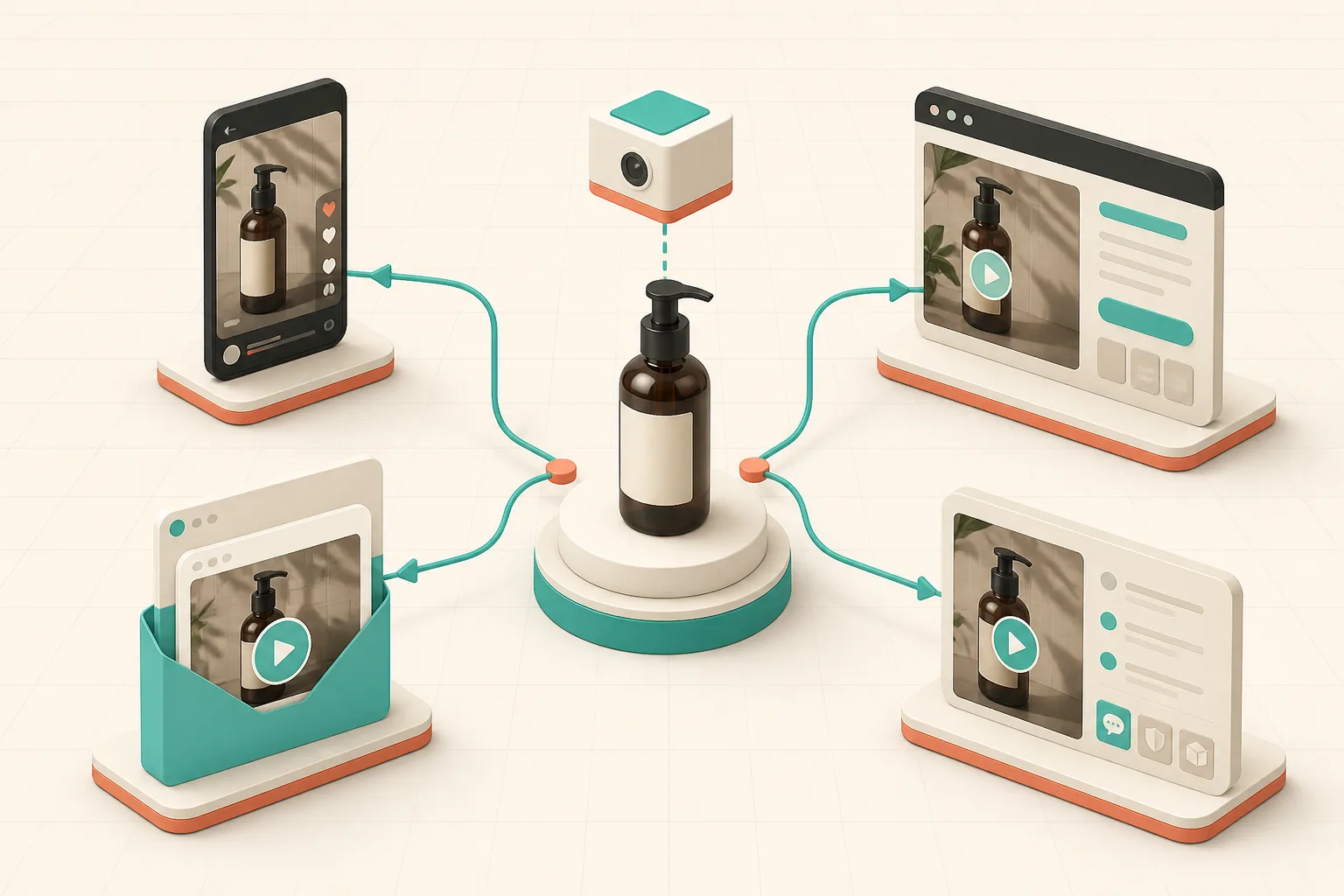
Once a version is approved, I do not automatically use it everywhere. I make a small routing decision:
- A fast, attention-grabbing opening goes to a TikTok, Reels, or paid-social test.
- A clearer product demonstration belongs on the Shopify product page.
- A short teaser can support an email launch or a replenishment flow.
- A practical explanation can become post-purchase education when it reduces setup questions or confusion.
That lets one product brief generate more mileage without pretending every channel has the same job. If the team already has structured renders, VideoFlow’s human-review workflow is a useful adjacent pattern: keep the input, review state, and final delivery separate. And if you need inspiration for how a single brief becomes multiple ads, I wrote earlier about turning one product brief into UGC video ads.
My final QA pass is deliberately boring
Before I download anything, I check that the product shown is the one I sell, the script makes no unsupported claim, the scene does not create a mismatch with the store, and the CTA points to the intended page. I also play the first few seconds with sound off. If the visual story only works after the voiceover starts, it needs another pass.
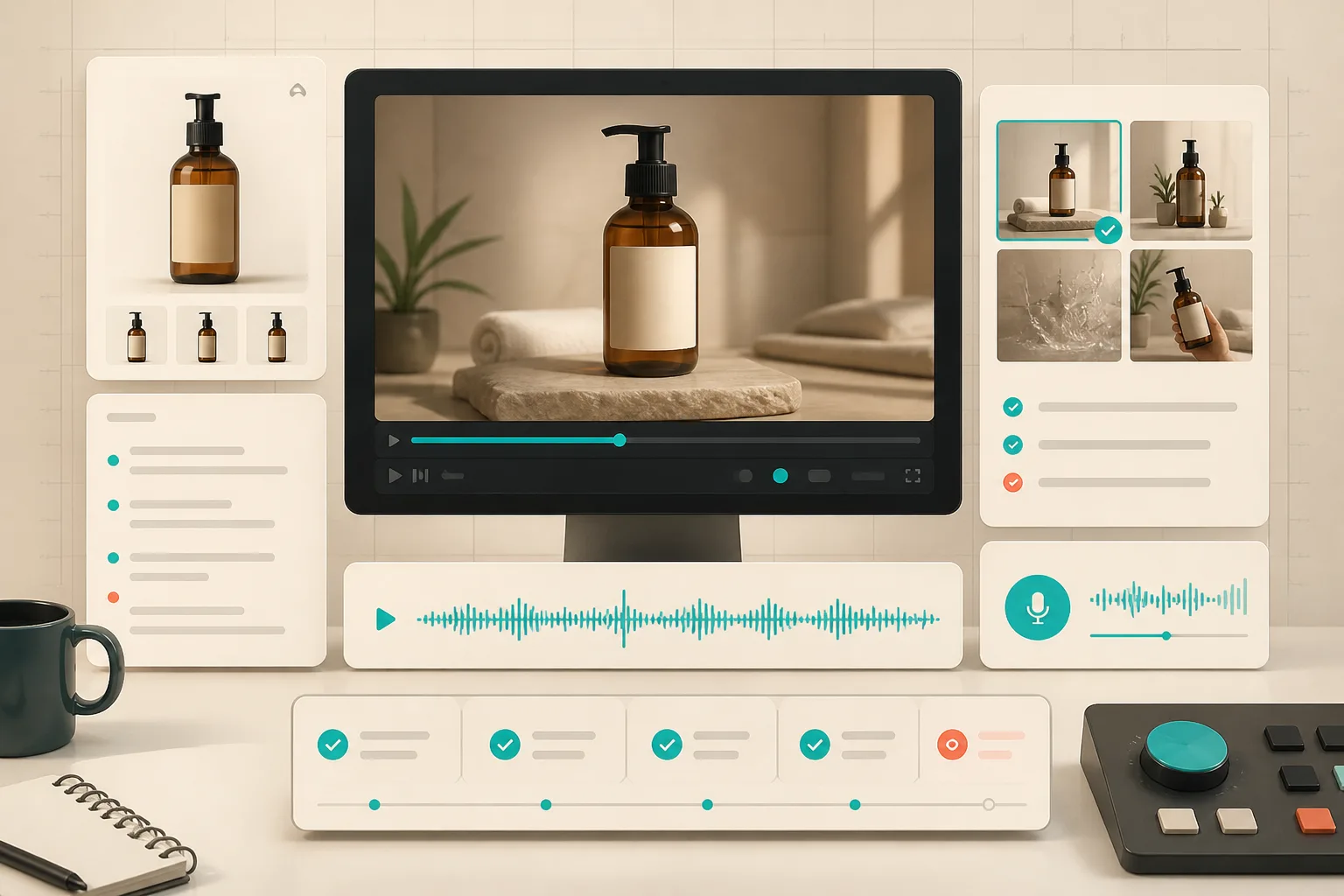
That checklist takes less time than cleaning up a bad campaign. It is especially important with avatar content: a clean production surface does not make an exaggerated claim trustworthy. I keep the language demonstrative and specific, and I use real creator material when a real personal experience is the point.
Start with one product and four hypotheses
The practical next step is small: choose one product with a clear customer question, write four hooks, and build four short variants around the same product reference. Try Supra UGC Maker on Shopify to create the first set, then review the result like an operator—not like a slot machine. Keep the winner, document why it worked, and let that learning fund the next creative test.
One good product brief can become a week of useful video experiments. The goal is not to flood every channel with AI footage; it is to make the next production decision cheaper, faster, and easier to defend.