
May 18, 2026
How to Build a Product-Aware Shopify Blog Workflow That Publishes on Schedule
A practical setup for shipping Shopify blog posts with product context, internal links, visuals, and a review step instead of generic AI drafts.
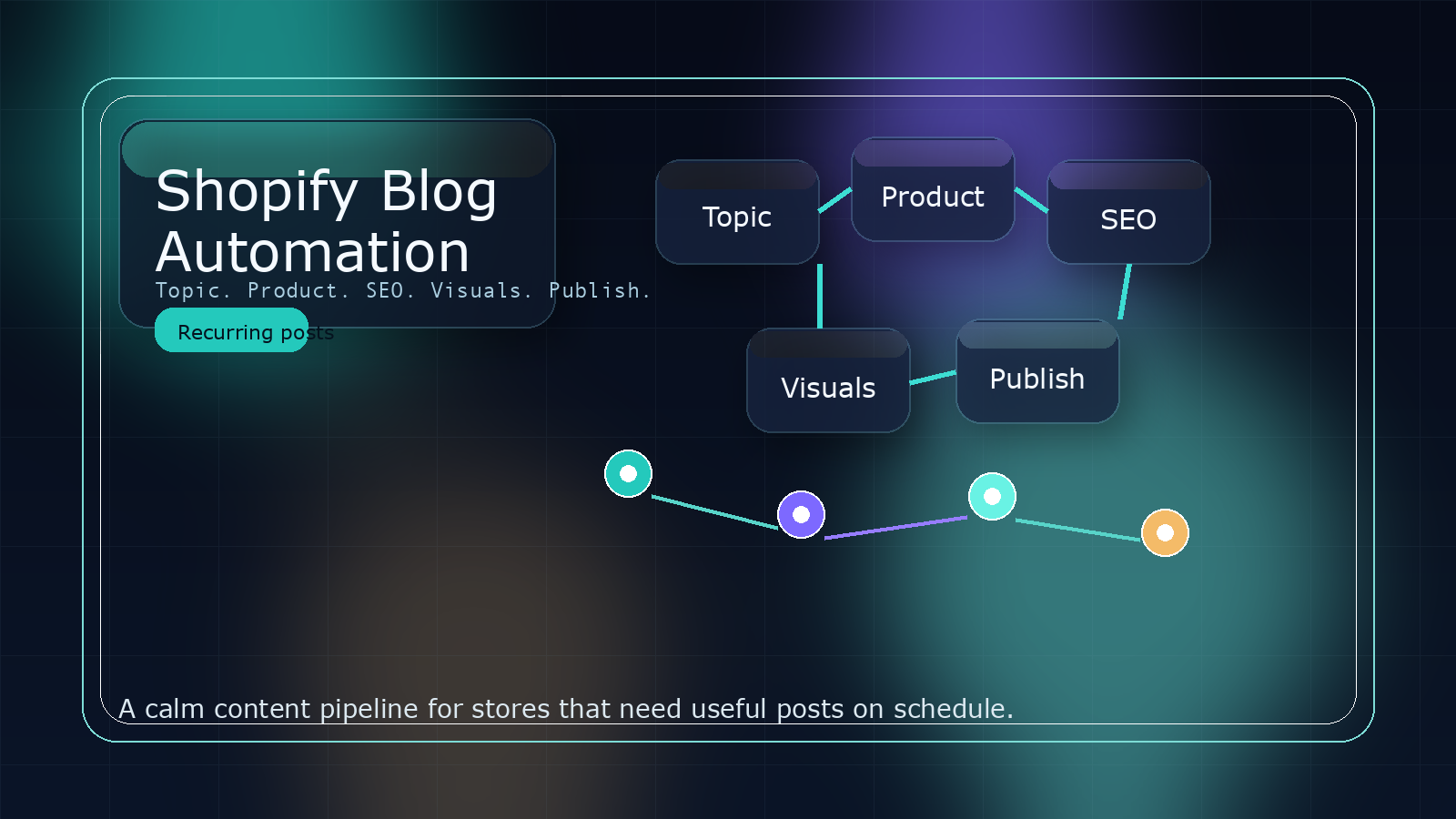
I do not want a Shopify blog that sounds like it was generated from a blank prompt. I want a workflow that starts with the product, keeps the reader’s problem in view, and still ships on schedule. That is what Supra Blog Automation is for, and the Shopify App Store listing makes the promise pretty clearly: generate, schedule, optimize, and publish posts without hand-building every article.
The trick is not “more AI.” The trick is giving the generator enough product context, then deciding which parts should be automated and which parts still deserve a review pass. If you want the broad version of that argument, I already wrote it up in How to Automate a Shopify Blog Without Publishing Generic AI Content, How to Build a Shopify Blog System That Publishes Better Posts on Schedule, How to Automate a Shopify Blog Without Generic AI Drafts, and How to Keep a Shopify Blog Publishing Without Generic AI Drafts. This post is the workflow I would actually ship.
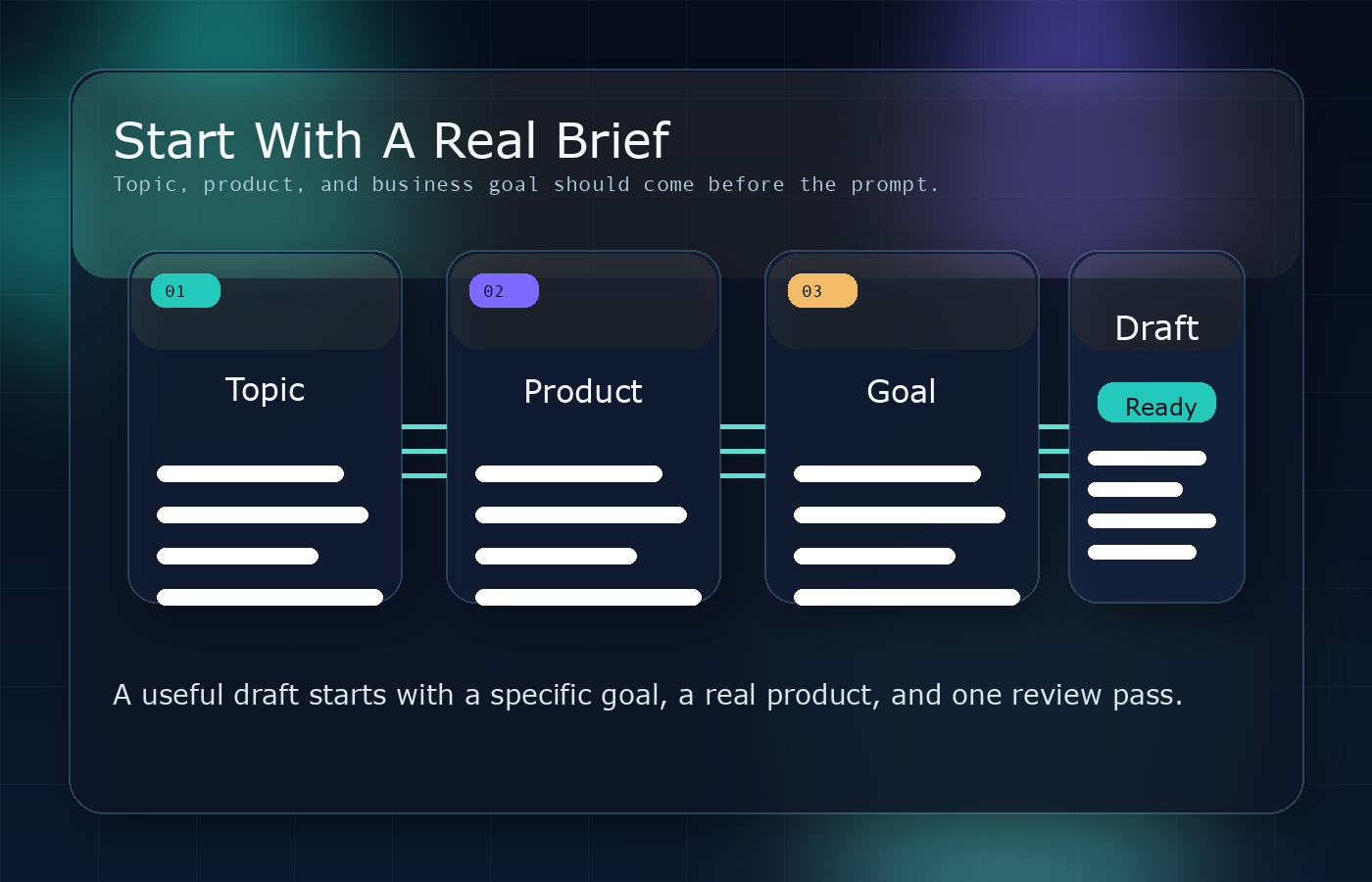
1. Start With A Real Brief
The cleanest posts start with one sentence about the reader’s problem, one sentence about the product or collection you want to support, and one sentence about the outcome you want from the post. That keeps the app from drifting into generic advice that could apply to any store.
This is roughly the shape I use before I generate anything:
{
  "topic": "How to choose the right product for a comparison guide",
  "goal": "educate shoppers and support product discovery",
  "tone": "practical",
  "products": ["featured collection", "best-selling product"],
  "image_sources": ["AI-generated visuals", "product photos"],
  "publish_mode": "draft first"
}
The point is not to lock yourself into a rigid template. The point is to make the app understand what success looks like before it writes a first draft. When I do that, the article title, headings, and CTA all get sharper because the generator has a real job to do.
2. Give The Generator Product Context Early
Supra Blog Automation can build a full post from topic, tone, goal, and product context, which is the difference between a blog that merely explains something and a blog that points readers toward the thing you actually sell. That matters for ecommerce because product-aware content is easier to trust than generic advice.
I would feed it the product or collection first, then layer in the search intent. For example:
- If the goal is discovery, write for “best,” “top,” or “how to choose.”
- If the goal is comparison, include the decision criteria the reader actually cares about.
- If the goal is product education, tie the post to one collection or one use case.
That approach makes the post feel like a useful buying guide instead of a placeholder SEO article. It also gives the app enough signal to add internal links, product mentions, and visuals that make sense in context.
3. Automate The Draft, Not The Judgment
I like automation most when it handles the boring part: outline, first draft, metadata, internal link suggestions, and visuals. I do not like treating automation like a permission slip to publish everything without reading it.
Supra Blog Automation supports publish-now and draft-first workflows, and I would keep that split deliberately. Use automatic publishing for low-risk, repeatable content. Use draft review for anything that includes product claims, seasonal advice, pricing references, or comparisons that need a human eye.
That is the pattern I used in the earlier posts above: the workflow is automated, but the editorial judgement is still there. If the app is good at generating structure, then the human job is to decide whether the structure is true, useful, and on-brand.
4. Put Internal Links Where They Help The Reader
Internal links should not feel like SEO confetti. They should answer the next question the reader is likely to ask.
In a Shopify blog workflow, that usually means:
- A collection page when the reader is deciding what to buy.
- A product page when the article introduces a concrete recommendation.
- Another educational post when the reader needs a related concept first.
That is also where a product-aware automation tool earns its keep. It can help you build posts that move naturally from problem to explanation to product discovery. When that happens, the blog is doing real merchandising work instead of just occupying a URL.
5. Match The Visuals To The Section
The product file says the app can use AI-generated visuals, stock images, or product-based images. I would not mix those randomly. I would pick visuals based on what each section needs to prove.
For a post like this, the layout I want is simple:
- One banner that summarizes the workflow.
- One image that shows the brief or input step.
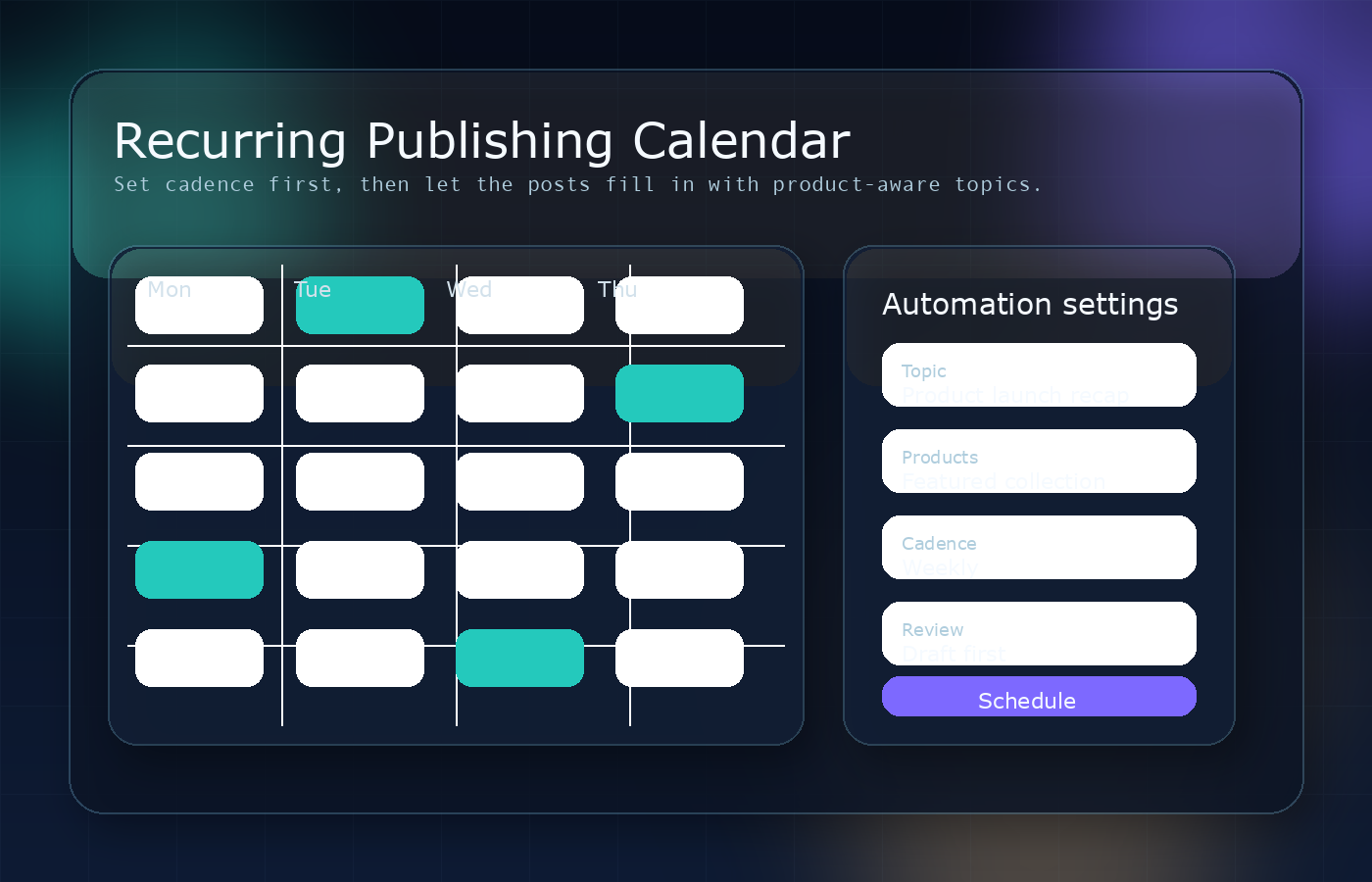
- One image that shows scheduling or recurring publishing.
- One image that shows the before/after of an inactive blog turning into a system.
That is the reason I built the visuals below with a dark aurora editorial style: the images should feel like the process, not like random filler.
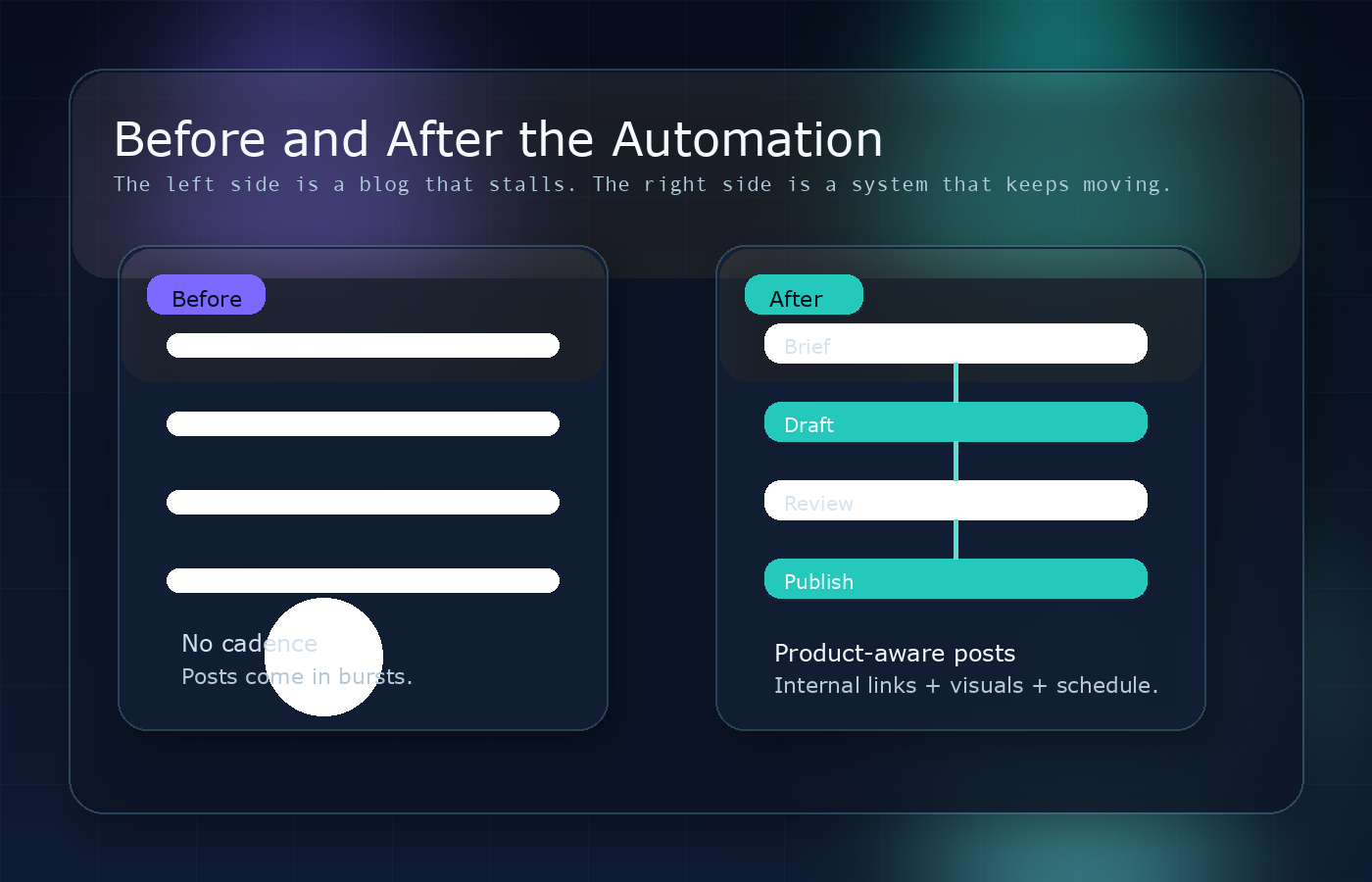
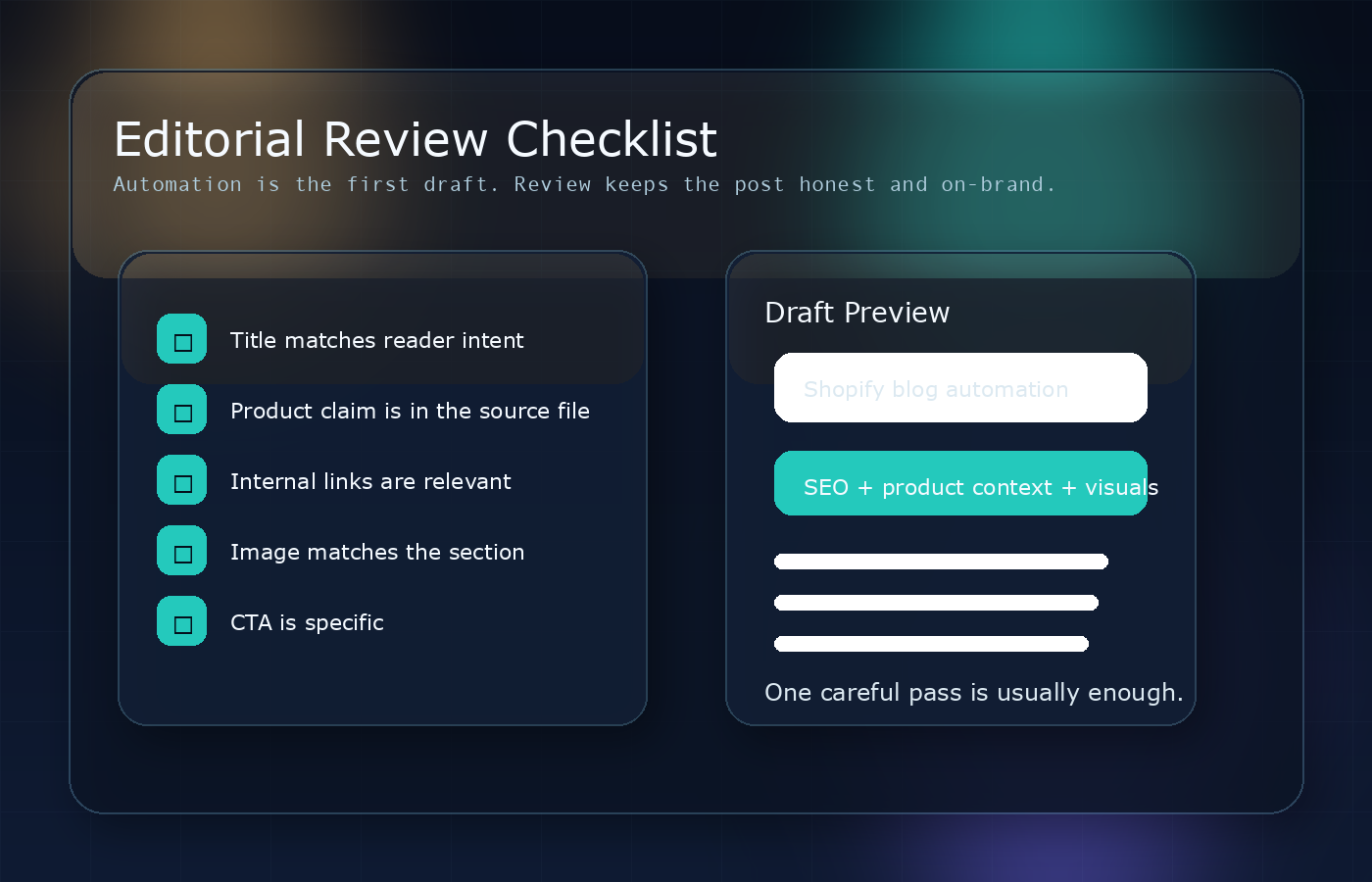
If you compare that to a generic stock-photo approach, the difference is obvious. The post feels designed around the workflow instead of decorated after the fact.
6. Set A Cadence You Can Actually Keep
A recurring blog only works when the cadence matches the store’s reality. Daily is fine for some stores, weekly is enough for many, and monthly can still be valuable if the content is tied to launches, seasonal buying guides, or product education.
The point is consistency, not volume for its own sake. A store that publishes one genuinely useful post every week will usually outperform a store that bursts out five mediocre articles and then goes silent for a month.
So I would set three rules:
- Pick one cadence and keep it for at least a month.
- Give each post one clear product or collection angle.
- Keep the review gate for anything that could misstate a product detail.
That is the balance the product is built for: automation where it saves time, review where it protects quality.
Wrap-Up
If you want a Shopify blog that helps SEO without sounding robotic, start with product context, let the app do the first draft, and keep one careful review pass before publish. That is the simplest way to get the benefit of automation without losing the usefulness that makes the post worth reading.
The next step is straightforward: open Supra Blog Automation, try the Shopify App Store version, and generate one draft for a real product collection this week.